

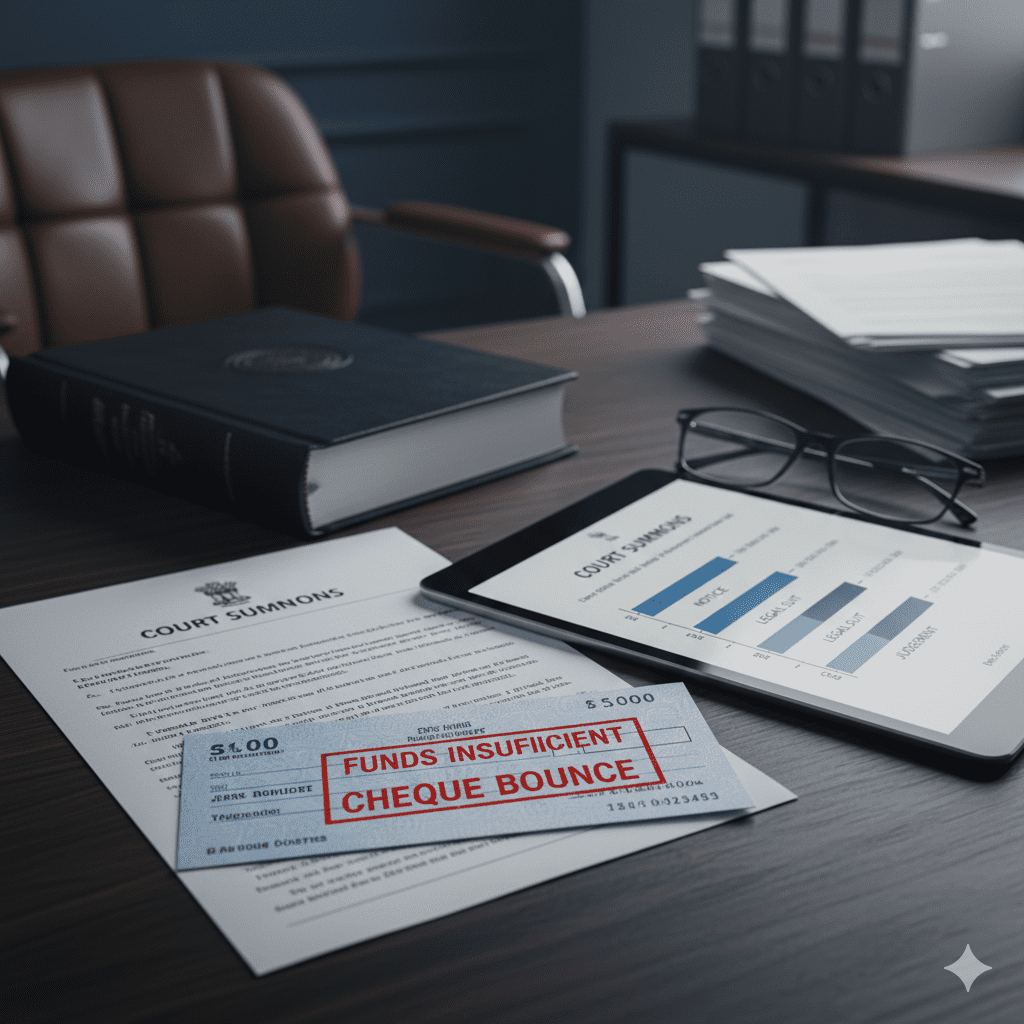
Cheque Bounce Case: Process, Timeline & Legal Remedies
A cheque bounce case is very common in India. It happens when a bank refuses to clear a cheque because there is no balance or some details are incorrect. The law treats this as a serious offence under Section 138 of the Negotiable Instruments Act. This guide explains the process, timeline, and your legal remedies in simple words.
Why Does a Cheque Bounce?
A cheque may bounce for many reasons. Common causes include:
insufficient funds
mismatched signatures
overwritten or damaged cheque
account closure
stop payment instructions
mismatch in numbers or words
Knowing the reason helps you take early action.
Step-by-Step Process of a Cheque Bounce Case
1. Receive the Bank Return Memo
When the cheque bounces, the bank gives a return memo. It states the reason for the bounce. Keep this document safe because you need it later.
2. Send a Legal Notice (within 30 days)
You must send a written legal notice to the cheque issuer within 30 days of receiving the return memo.
The notice demands the payment of the cheque amount within 15 days.
3. Wait for 15 Days
If the person pays within 15 days, the issue ends.
If not, you can file a case in court.
4. File a Complaint in Court (after 15 days & within 30 days)
The complaint must be filed before a Judicial Magistrate.
You need:
the original cheque
bank memo
copy of the legal notice
postal receipt
proof that notice was delivered
5. Court Issues Summons
Once the court accepts the complaint, it issues summons to the accused. They must appear before the court on the given date.
6. Trial Begins
Both sides present evidence. The court examines witnesses, documents, and bank records. This part takes time, but it is crucial.
7. Final Order
If the court finds the accused guilty, it can order:
jail up to 2 years
fine up to twice the cheque amount
compensation to the complainant
Timeline of a Cheque Bounce Case
Most cases take 6 months to 2 years, depending on:
court workload
cooperation of both parties
any settlement attempts
Some courts also encourage mediation, which can close the case faster.
Legal Remedies Available to You
✔ Criminal Complaint Under Section 138
You can file a criminal case against the issuer. This puts strong pressure and increases the chance of recovery.
✔ Civil Recovery Suit
You can file a civil suit to recover the cheque amount with interest and damages.
✔ Summary Suit
A summary suit is faster than a normal civil case. It is useful if the amount is high.
✔ Settlement or Mediation
Many cheque bounce matters settle through compromise. It saves time and cost for both parties.
How to Avoid a Cheque Bounce Issue
Check account balance before issuing a cheque
Never sign a blank cheque
Keep your cheque book updated
Avoid overwriting or corrections
Use online transfers to avoid disputes
Conclusion
A cheque bounce can be stressful, but the law gives you strong protection. Follow the correct process, send a proper legal notice, and take timely legal action. With the right steps, you can recover your amount safely and legally.