

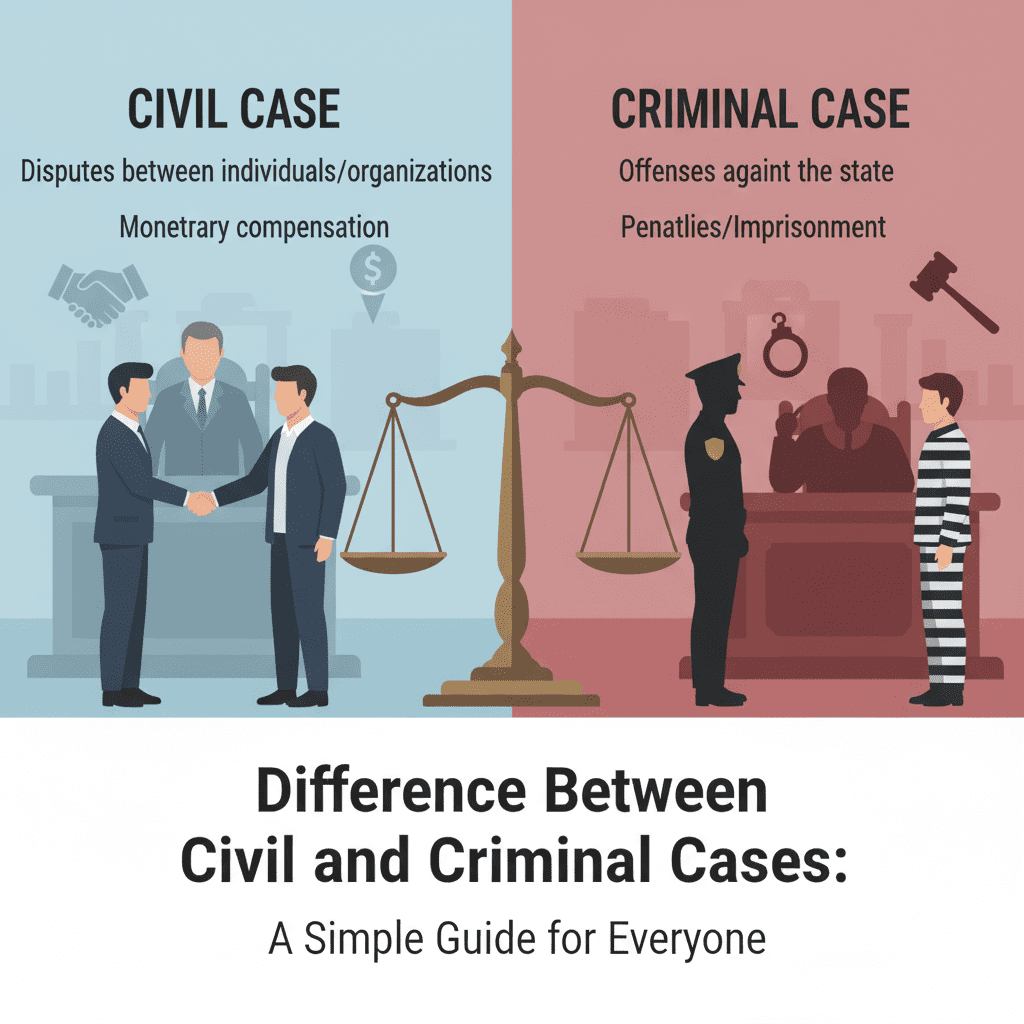
Understanding the legal system can feel confusing. Many people do not know the difference between civil and criminal cases. This simple guide explains both types of cases in clear and easy words. It also helps you know when you may need a lawyer.
What Is a Civil Case?
A civil case deals with personal disputes between two parties. These parties can be people, companies, or organizations.
Civil cases usually involve money, property, or personal rights.
They are filed when someone feels their rights are violated.
Common Examples
Property disputes
Divorce and child custody
Contract disagreements
Consumer complaints
What Is the Main Goal?
The goal is to provide compensation or relief. It does not involve jail punishment.
Often, civil cases end through negotiation or settlement.
What Is a Criminal Case?
A criminal case is filed when someone commits an act that harms society or breaks the law.
The government takes action through the police and the court.
Here, the goal is to punish the guilty person.
Common Examples
Theft
Fraud
Murder
Assault
Cyber crimes
What Is the Main Goal?
The aim is to protect society. The person may face jail, fines, or both.
Key Differences at a Glance
1. Purpose
Civil Case: To resolve disputes and offer compensation.
Criminal Case: To punish the offender.
2. Parties Involved
Civil Case: Private party vs. private party
Criminal Case: State/Government vs. accused person
3. Burden of Proof
Civil Case: Based on “preponderance of evidence.”
Criminal Case: Based on “proof beyond reasonable doubt.” This is a higher standard.
4. Punishment
Civil Case: Compensation, property rights, or injunctions.
Criminal Case: Jail, fine, or both.
5. Police Involvement
Civil Case: Police usually do not get involved.
Criminal Case: Police investigate and file charges.
When Should You Consult a Lawyer?
You should talk to a lawyer if:
You are dealing with a property or family dispute
Someone has cheated you or violated a contract
You are accused of a crime
You want to file a criminal complaint
A lawyer guides you, explains your rights, and helps protect you in court.
Conclusion
India’s legal system treats civil and criminal cases differently. Civil cases focus on solving disputes, while criminal cases deal with offenses against society.
Knowing the difference helps you take the right steps and seek the right legal help.